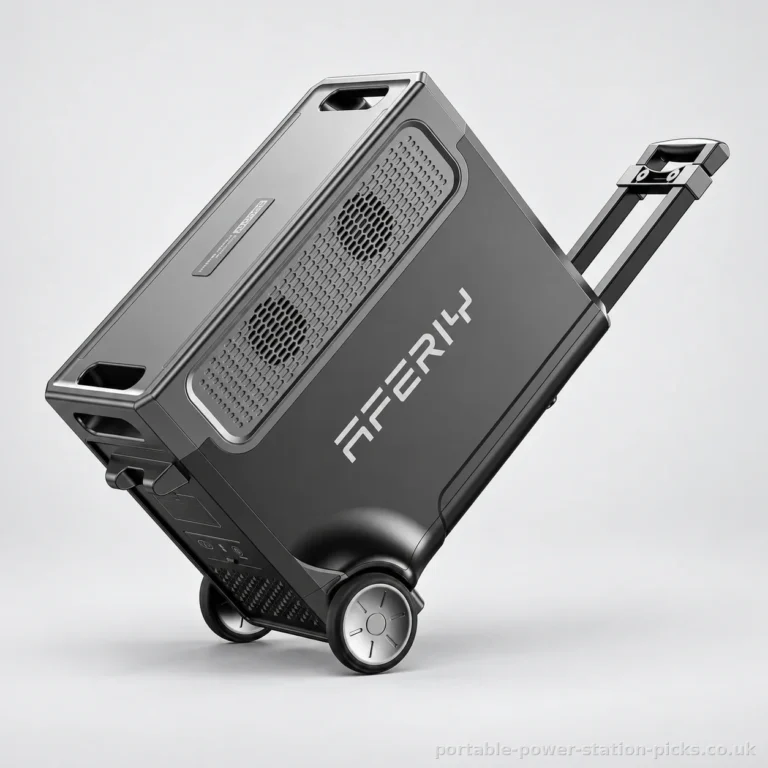
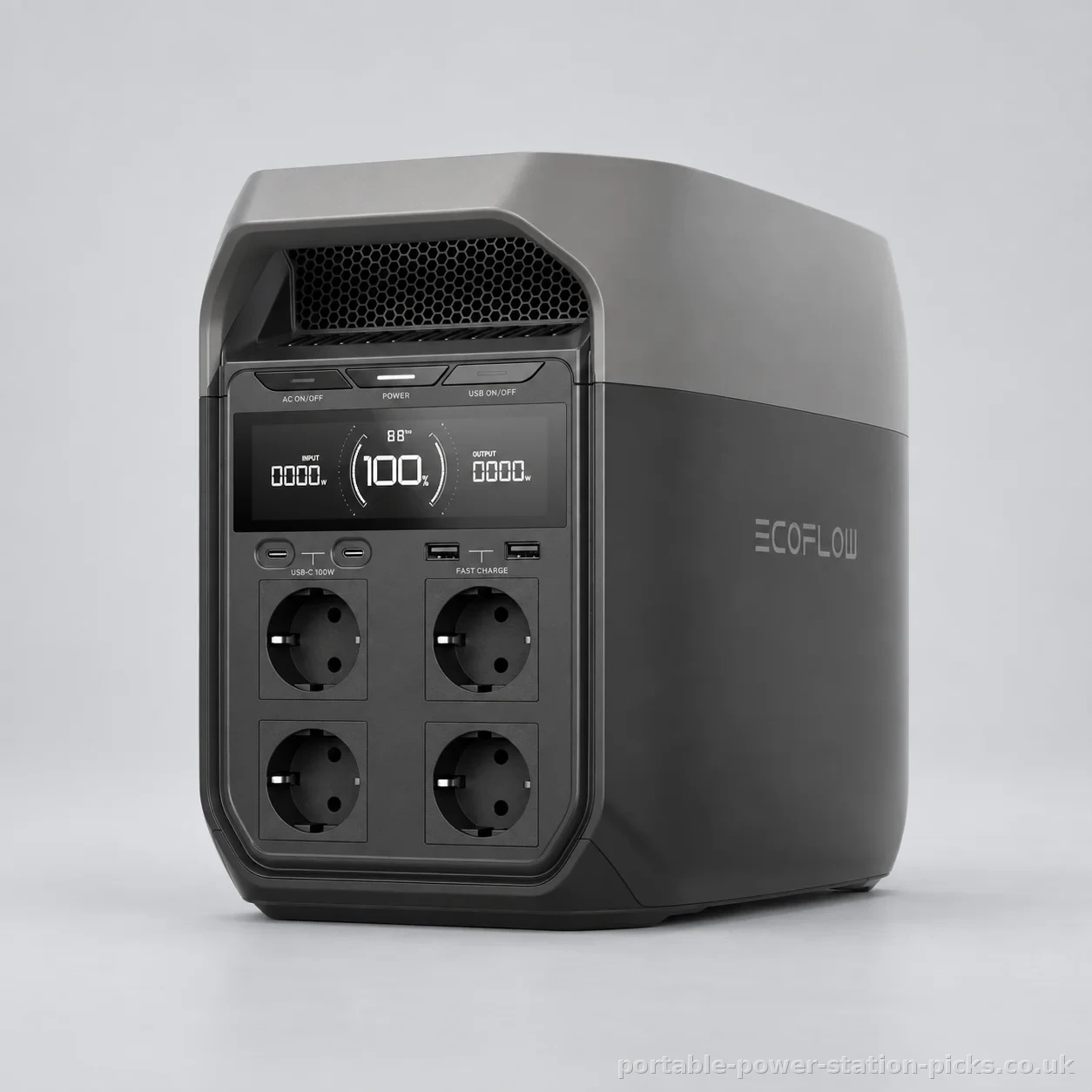
Real and AI-generated images for illustration to help you picture the product • Find more photos on the retailer's site.
EcoFlow DELTA 3 (portable power station with expandable battery capacity): our review
Brand: EcoFlowOur methodology
EcoFlow DELTA 3 review for evenings when the sockets stop helping
The DELTA 3 combines a substantial reserve for essentials with output for a demanding appliance. We like its solar compatibility and the option to add an expansion battery. Its strongest role is supporting a considered selection of equipment across home and campervan use.
Verdict
8.4/10Our view on EcoFlow DELTA 3 when everyday essentials matter
When the kitchen lights disappear into a stormy evening, a reserve with a clear purpose earns its place. We like the DELTA 3 for essentials at home and useful electricity beside a campervan. It is well placed overall: a practical reserve with somewhere to go at the weekend.
Our verdict: We recommend it for people sharing their backup needs between home and trips. The AFERIY P310 for home backup is better suited to backup power at home and is better rated overall.
Things to bear in mind Avoid it if you expect prolonged heavy consumption. That appetite will empty the battery sooner than its capable output might lead you to expect.
Review by Romain Brunel, founder of Portable Power Station Picks
Who it's for
A portable reserve for the campervan and the cupboard at home
- Campervan owners using pitches without electric hook-up
- Households keeping essential devices powered during interruptions
- Campers planning a compatible solar setup
This suits a campervan owner who wants electricity at a pitch without hook-up and a useful reserve back home. Beside the van, a supper lamp and a phone needing a charge give that reserve a straightforward job. The ability to add an expansion battery also makes sense if those needs develop beyond your initial routine.
Less suitable if
Look elsewhere if frequent long walks with your equipment dominate the plan, or if your appliances exceed the rated output. This station makes more sense when its destination is reasonably close to where you unload.
This page contains affiliate links. Every product is assessed using factual data. These links support our work at no extra cost to you 💚
Dimensions
Where would this power station fit among your camping gear?
| Length | Not specified |
| Width | Not specified |
| Height | Not specified |
| Net weight | Approximately 12,5 kg |
Specifications
This portable power station has a useful reserve behind its sockets
| Rated power | 1800 W |
| Battery capacity | 1024 Wh |
| Weight | 12,5 kg |
| Maximum solar input power | 500 W |
| Number of 230 V sockets | 4 sockets |
| Solar | Solar charging compatible |
| Use | Motorhome |
| Expansion battery | Compatible with an expansion battery |
| Battery technology | LiFePO4 |
| Non-USB DC outputs | 12 V cigarette lighter socket |
| App connectivity | Wi-Fi |
| AC outlets | 4 230 V outlets |
| Included panel power | not specified |
| Car socket output | 12,6 V, 12 V category |
Pros
Useful connection choices give your essentials somewhere to plug in
- A large energy reserve for essentials during a power cut
- Rated output gives a demanding appliance room to operate
- Plenty of mains sockets for separate connections
- Generous maximum solar input for a compatible setup
- Expansion battery compatibility leaves room for changing needs
Cons
Heavy consumption gives this portable battery its hardest job
- Continuous heavy loads soon use up the available energy
- Carrying suits short moves better than distant pitches
- Available sockets still share the station's output limit
Our scores explained
Every model on the site is scored on the same criteria, using the same scale: its position among models with verified data for that specification. Last place earns 6.5, first place 9.6, and the rest are scored in proportion to their rank. Here is how this model's scores are calculated.
Two model counts: the rank and average include product pages on this site scored for the criterion; the calculation compares the model with all catalogue models whose specification is verified, with or without a product page. A score assigned at publication may remain without a verified specification, so the first count can sometimes be higher.
Rated power: 8/10
EcoFlow DELTA 3 scores 8/10 on this criterion. Across the 27 product pages on the site with a score for this criterion, the average is 8.1: below average, Rank 13 out of 27.
View calculation
| Shared baseline: last place in the ranking | 6.5 |
|---|---|
| Rated power: 1 800 w ; 14 perform worse, 15 perform better, 3 are tied (including this model), among the 32 catalogue models with this specification verified | +1.5 |
| Rated power score | 8/10 |
Calculation: (14 + 3 ÷ 2) ÷ 32 = 48.44% of the ranking; 6.5 + 48.44% × 3.1 = 8/10, rounded to one decimal place.
Battery capacity: 7.9/10
EcoFlow DELTA 3 scores 7.9/10 on this criterion. Across the 26 product pages on the site with a score for this criterion, the average is 8.1: below average, Rank 13 out of 26.
View calculation
| Shared baseline: last place in the ranking | 6.5 |
|---|---|
| Battery capacity: 1 024 wh ; 12 perform worse, 15 perform better, 4 are tied (including this model), among the 31 catalogue models with this specification verified | +1.4 |
| Battery capacity score | 7.9/10 |
Calculation: (12 + 4 ÷ 2) ÷ 31 = 45.16% of the ranking; 6.5 + 45.16% × 3.1 = 7.9/10, rounded to one decimal place.
Weight: 7.8/10
EcoFlow DELTA 3 scores 7.8/10 on this criterion. Across the 23 product pages on the site with a score for this criterion, the average is 7.9: below average, Rank 13 out of 23.
View calculation
| Shared baseline: last place in the ranking | 6.5 |
|---|---|
| Weight: 12.5 kg ; 10 perform worse, 14 perform better, 1 are tied (including this model), among the 25 catalogue models with this specification verified | +1.3 |
| Weight score | 7.8/10 |
Calculation: (10 + 1 ÷ 2) ÷ 25 = 42% of the ranking; 6.5 + 42% × 3.1 = 7.8/10, rounded to one decimal place.
Number of 230 V sockets: 9.3/10
EcoFlow DELTA 3 scores 9.3/10 on this criterion. Across the 21 product pages on the site with a score for this criterion, the average is 8.1: above average, 1st out of 21.
View calculation
| Shared baseline: last place in the ranking | 6.5 |
|---|---|
| Number of 230 V sockets: 4 sockets ; 18 perform worse, 0 perform better, 4 are tied (including this model), among the 22 catalogue models with this specification verified | +2.8 |
| Number of 230 V sockets score | 9.3/10 |
Calculation: (18 + 4 ÷ 2) ÷ 22 = 90.91% of the ranking; 6.5 + 90.91% × 3.1 = 9.3/10, rounded to one decimal place.
Equipment: 9/10
EcoFlow DELTA 3 scores 9/10 on this criterion. Across the 28 product pages on the site with a score for this criterion, the average is 8.1: above average, Rank 4 out of 28.
View calculation
| Shared baseline: last place in the ranking | 6.5 |
|---|---|
| 5 features found out of 13 tracked: 24 perform worse, 3 perform better, 6 are tied (including this model), among the 33 catalogue models with this specification verified | +2.5 |
| Equipment score | 9/10 |
Calculation: (24 + 6 ÷ 2) ÷ 33 = 81.82% of the ranking; 6.5 + 81.82% × 3.1 = 9/10, rounded to one decimal place.
Recorded features: Solar (Solar charging compatible), Expansion battery (Compatible with an expansion battery), Battery technology (LiFePO4), Non-USB DC outputs (12 V cigarette lighter socket), App connectivity (Wi-Fi).
The retailer does not specify: Built-in transport features. These features are not counted.
Overall score: 8.4/10, the average of the 5 scores above.
Detailed analysis
The lamps go out just as everyone settles down for the evening, and suddenly the battery percentage on your phone looks rather important. The EcoFlow DELTA 3 offers a reserve for essential devices during a power cut, with enough output to consider demanding appliances too. We see particular appeal for campervan owners who also want backup electricity at home, provided they keep a clear eye on consumption.
The DELTA 3 portable power station gives a power cut clear priorities
A power cut halfway through a wet Sunday evening makes the essentials rather obvious: some light, a charged phone and the broadband router, if the connection outside your home still works. With 1024 Wh, the DELTA 3 offers a large energy reserve for that sort of interruption. We see it as a reserve for essentials, with actual running time shaped by their consumption and the energy available after conversion losses.
What would you want to keep going until the electricity returns? That question matters more than filling every socket. Sustained high consumption eats through the reserve quickly, so an appliance that can run electrically may still be an unhelpful choice for a long evening.
Our overall assessment places it well. Its appeal is the balance between useful stored energy and a format that can also leave the house for a campervan weekend. The torch can retire from its starring role on the kitchen table.
Can DELTA 3 supply your demanding appliance?
The rated output of 1800 W gives this station scope to supply a demanding appliance, provided its requirements stay below that ceiling. A kettle in a campervan is a plausible candidate, but its label gets the deciding vote. Add together the demand of everything running simultaneously, rather than judging each appliance in isolation.
There are 4 sockets, providing plenty of mains connections for arranging your equipment. That is convenient when a lamp and other essentials need separate plugs, though the shared output limit still applies. A free socket is not extra power.
For equipment with a motor, starting demand needs checking separately; the rated output does not establish which starting surges this station can accommodate. The 12 V cigarette lighter socket also provides a connection route for suitable DC equipment. Check the equipment's voltage and power requirements before choosing that route. We appreciate having connection choices without treating every outlet as something that must be occupied.
Solar gives the DELTA 3 portable power station another role at camp
A campervan parked beside a loch gives solar charging a clear purpose: replenish the battery while you spend the morning outdoors. The maximum solar input of 500 W is generous enough to make a considered panel arrangement worthwhile. It is an input ceiling, not a promise of what arrives from the sky. Sunshine, panel orientation and the chosen equipment determine the incoming power.
Solar compatibility makes this portable battery relevant to a campsite without electric hook-up, particularly when you can position compatible panels in useful light while keeping the station sheltered. Panels and charging cables are not confirmed as included; check the package contents before planning your first trip around them.
Follow the manufacturers' guidance on protection from rain and high temperatures, and charge in a ventilated place. A sheltered position needs to remain practical when the weather changes, with room around the station rather than luggage piled against it. That matters beside a van just as much as it does beneath a camping shelter.
A few metres suit DELTA 3 better than a long walk
At 12.5 kg, this is a weight you can carry by the handle for a few metres. That suits unloading beside a campervan or moving the reserve from a cupboard to the room where it is needed. A distant pitch reached through several gates deserves more thought, especially when the rest of your luggage already requires repeated journeys.
The battery uses LiFePO4 chemistry. That identifies the battery type, but chemistry alone gives no firm promise about how long it will last in your routine. Expansion battery compatibility gives you a route to a larger reserve if your plans grow. Choose an expansion battery confirmed as compatible with the station.
Wi-Fi app connectivity is also supported. That could fit neatly into a holiday cabin routine where connectivity is available, although particular remote controls or monitoring functions need confirmation before you rely on them. Our interest here is practical: a station that can move between home backup duties and motorhome use, with short carrying distances making that shared role more appealing.
Choose your alternative around the job you need done
The Jackery Explorer 2000 v2 alternative is better suited to demanding appliances and has a similar overall score. Its rated output of 2200 W gives more headroom for a demanding load, which makes it worth considering when your appliance requirements lead the decision.
The VEVOR M6 600 W 493 Wh is better suited to frequent carrying, although it is less well rated overall. Its 5.80 kg makes regular moves less of a carrying job. That is a meaningful reason to choose it when equipment spends as much time travelling across a campsite as sitting beside the tent.
The ALLPOWERS R2500 V2 solar alternative is better suited to a generous solar charging setup and has a similar overall score. Its maximum solar input of 1000 W leaves more room for incoming solar power from compatible panels. The sunshine still decides how much of that room you use. Choose around the task that keeps recurring, rather than a capability you might never need.
This portable power station features in

Analysis by Romain Brunel
Founder of Portable Power Station Picks
We analyse portable power station specifications using manuals, specification sheets and buyer reviews. We explain capacity, power output and charging criteria while distinguishing stated data, estimates and documented limitations.
Updated on 30 October 2026
Frequently asked questions
Your questions before choosing the DELTA 3 portable power station
Can DELTA 3 run a demanding appliance?
Its rated output is 1800 W, enough for a demanding appliance whose requirements stay below that limit. Include everything operating simultaneously in your calculation. For equipment with a motor, check its starting requirements separately before relying on the station.
Does DELTA 3 support a larger battery reserve?
Yes, it is compatible with an expansion battery. That gives you a route to more stored energy if your needs grow. Choose an expansion battery confirmed as compatible rather than assuming any external battery will work.
How should I think about solar charging?
Solar charging is supported, with a generous maximum input. Actual incoming power depends on the compatible panels you choose, their orientation and the sunshine available. Position the panels for useful light while keeping the station sheltered according to the manufacturers' guidance.
What should I check about warranty and returns before ordering?
Confirm the warranty, who handles after-sales support and the retailer's returns policy before ordering. Keep the written terms with your purchase records so you know whom to contact if the station needs attention.
EcoFlow DELTA 3
Pros
- A large energy reserve for essentials during a power cut
- Rated output gives a demanding appliance room to operate
- Plenty of mains sockets for separate connections
- Generous maximum solar input for a compatible setup
Before you buy
- Continuous heavy loads soon use up the available energy
- Carrying suits short moves better than distant pitches
- Available sockets still share the station's output limit
Other models in this series
- EcoFlow DELTA 2 8.5/10Overall rating
- EcoFlow DELTA 3 You are here 8.4/10Overall rating
Models grouped by series name. A higher number doesn't guarantee a newer model: not all manufacturers publish release dates.
Compare with another model
More portable power stations Solar charging analyses
AFERIY P310
Overall rating
OSCAL PowerMax 6000
Overall rating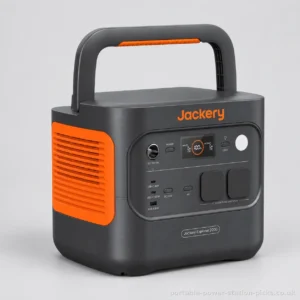
Jackery Explorer 2000 v2
Overall rating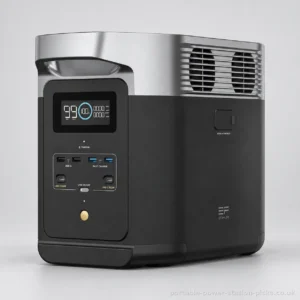
EcoFlow DELTA 2
Overall rating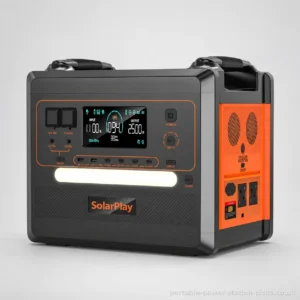
SolarPlay Q2402M
Overall rating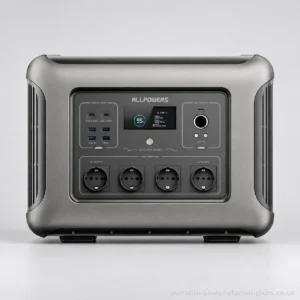
ALLPOWERS R2500 V2
Overall rating
FOSSIBOT F2400
Overall rating
Have a question about this model?